
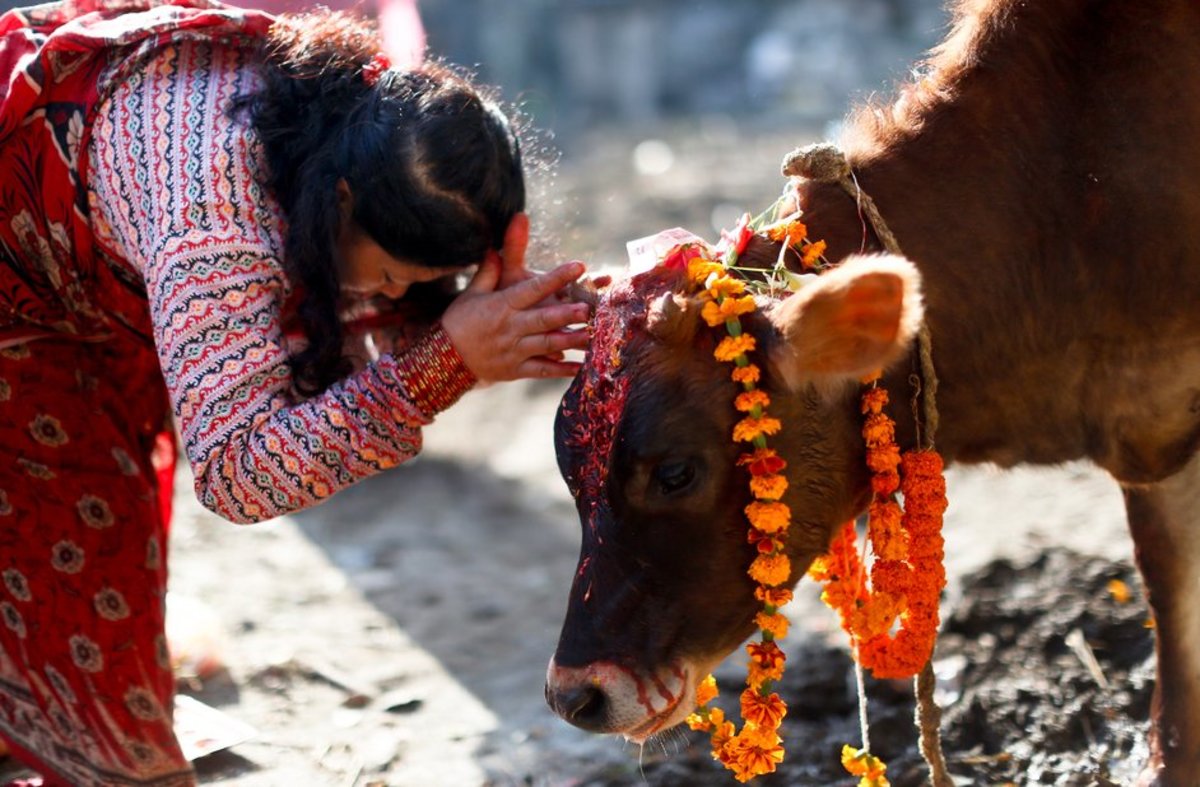
Hindus sure know how to love their cows (photo source)
The world of milk is rife with environmental problems, shady dairy-free alternatives, and dodgy animal welfare standards. So I'm going to try to navigate this milky minefield in under 650 words. Its kind of an info overload, sorry.
Welfare Standards
Lets start with cow-milk, because that is the
kind of milk that most of us put in our tea (we are British after all). It seems that a lot of British cows eat pasture in the summer, and live indoors eating hay, maize and crop waste products in the winter. This sounds like a good enough reason to buy British dairy products since I'm not sure how cows are treated in other countries.
The
Compassionate Food Guide doesn’t go into loads of detail about milk, but it does say to
buy organic or RSPCA Freedom Food milk wherever possible because it means the
cows have access to pasture in the grass growing season and are less crowded
when inside. Once again Red Tractor standards are easily the lowest.
Welfare standards are not only affected by the
environment cows live in but also by their breed. Milk production per cow
roughly doubled in the past 45 years and organic farmers are more likely to
keep breeds which produce moderate amounts of milk.
Animal Health and Welbeing
Following on from my pig post two weeks ago we
should remember that milk is not cheap, it doesn’t happen by magic. Milk is
produced by mothers to feed babies (as some of you worldly folk might already
know), so cows must become pregnant to produce it. This tends to mean
artificial insemination (not very romantic), calves being taken from their
mothers too soon (making mums and babies stressed and traumatised) and health
problems associated with selective breeding for higher milk production
(lameness, mastitis, infertility, weight-loss, I mean literally so many health problems, I don’t have
time to explore them here, but if you would like more info here’s a link to
start you off).
So it’s unsurprising that its not just weirdy-beardy vegans who drink milk alternatives nowadays. Soya
and almond milk seem to be the most popular but both of these have come under
scrutiny recently for their environmental impact: it seems like milk drinkers
can’t do anything right!
A lot of almond milk is produced in California which
was suffering from some pretty serious droughts until recently, and extra industrial farming isn't going to improve their water situation. Industrial-scale soya production, on the other
hand, contributes to the destruction of the Amazon rainforest. But I think that
the main problems with milk alternatives are:
- They transport a lot of water from their place of production
- They are produced in tetra-packs which are hard to recycle because they are made of a bunch of materials mixed together
Coconut milk and rice milk seem to be slightly
better (for now), but I think that once again the solution before us is to
simply drink less milk. Let's think about what we might be able to substitute
water for, or perhaps drink more mint tea (I know we’re British but let’s face
it, tea is imported thousands of miles to get here).
Good Milk!
The good news is that there are plenty of
decent local farmers selling milk in Bristol: Bruton Dairy and Jess’s Ladies
are two good examples (Jess’s Ladies make the most delicious yogurt on earth
by the way). Also I have started making my own pumpkin seed milk, which makes me cringe every time I say it out loud (although its actually quite similar to sugar-free almond milk). And if, like me, you love chocolate, you might be interested to hear that the Compassionate Food Guide gave Green & Black's a big fat thumbs up for their animal welfare standards.
Do some research of your own, share ideas, I would love to hear your thoughts or anything you find out.

No comments:
Post a Comment